Sometimes the most effective way to challenge a misconception isn’t with a sophisticated marketing or detailed presentations—it’s with a snack.
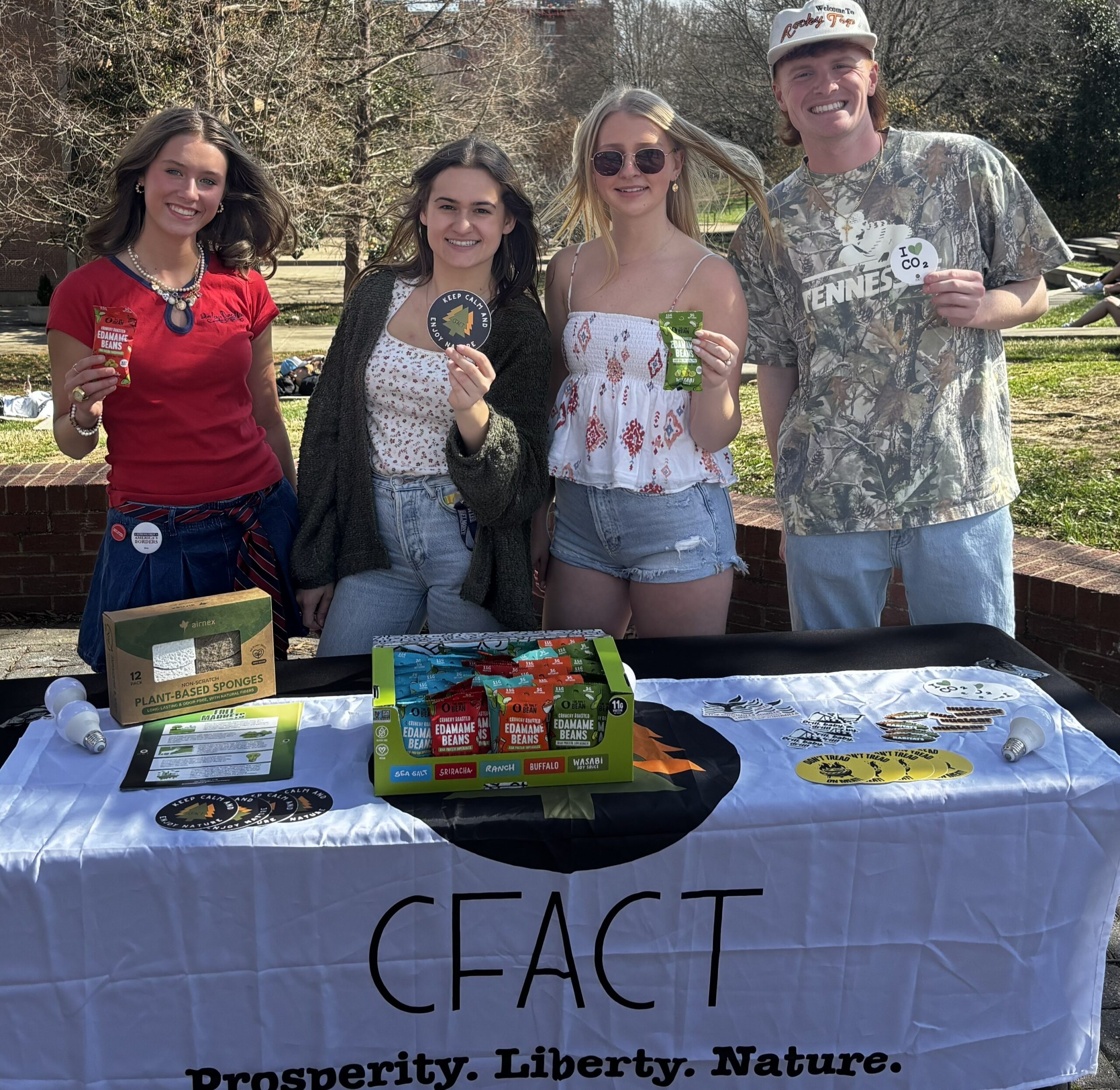
That was exactly the strategy employed by CFACT Collegian Emma Arns at the University of Tennessee, Knoxville, who recently hosted “plant-based snack giveaway” tabling event designed to tackle one of the most persistent myths on campus: that CO₂ is a pollutant rather than an essential building block of life.

Emma transformed a simple table into a platform for climate realism. Students were initially drawn in by free plant-based snacks but quickly found themselves engaging in conversations about the very thing that made those snacks possible. Using CFACT literature and eye-catching “I ♥ CO₂” stickers, Emma walked students through a fundamental but often overlooked truth: without carbon dioxide, there is no plant life—and without plant life, there is no food system.
Armed with “The Real Facts About CO₂” flyer (pictured left, above), Emma highlighted how CO₂ acts as an aerial fertilizer, boosting plant growth, improving drought resistance, and supporting global agriculture. What could have been a fleeting interaction instead became a moment of clarity for many students, reframing CO₂ not as an enemy, but as a critical component of a thriving planet.
What makes this event so powerful is its simplicity. There are no gimmicks, no prerequisites—just a tangible example and a willingness to engage. By pairing something familiar (food) with something frequently misrepresented (CO₂), our campus representative created an immediate and memorable learning experience.
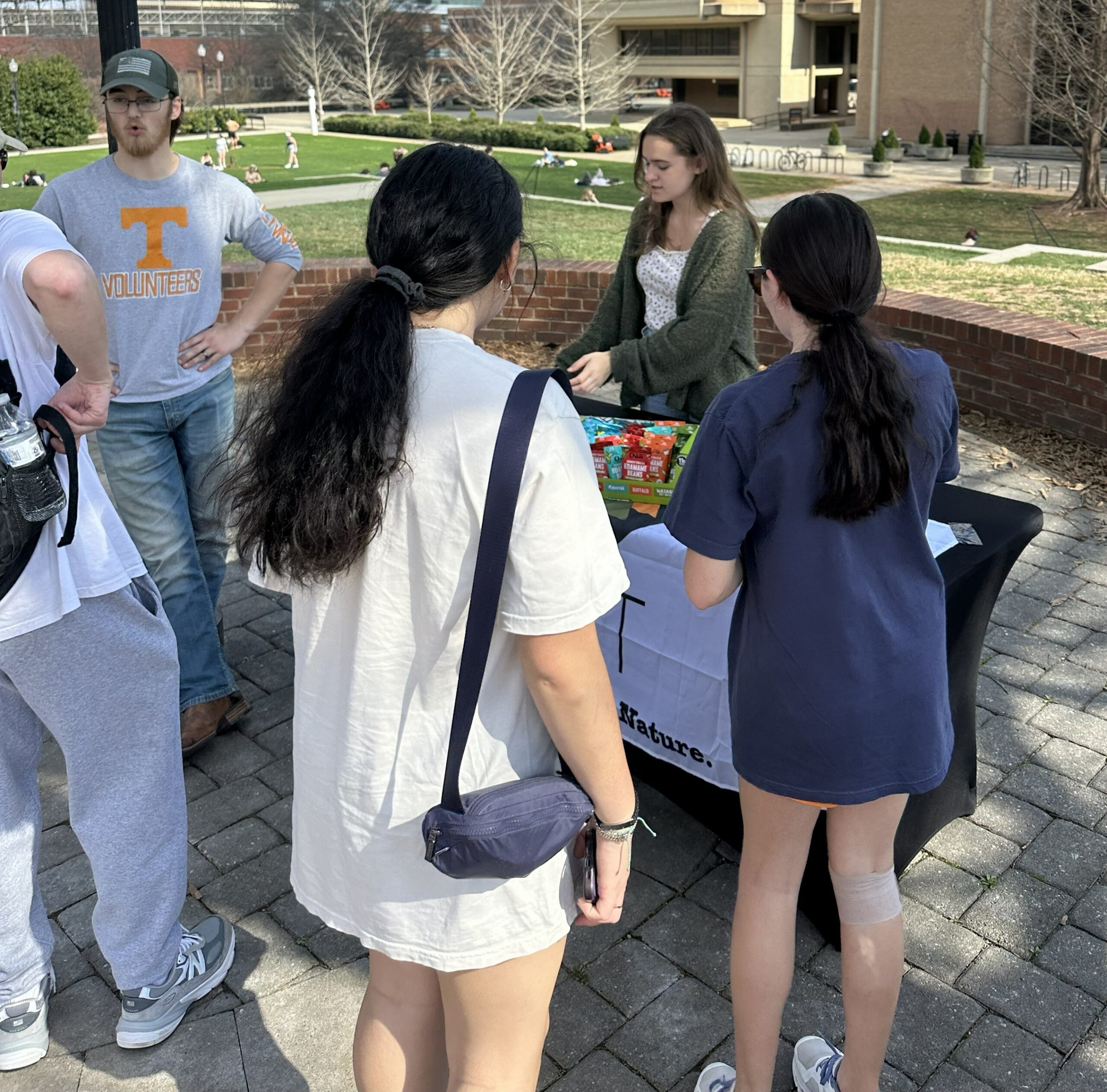
Thanks to Emma’s initiative, students in Tennessee no longer associate CO₂ with pollution, rather their appetites.
In an academic environment dominated by one-sided messaging, CFACT students are proving that even the smallest interactions can spark meaningful change—one conversation, and one snack, at a time.