When it comes to conservation, CFACT Collegians aren’t content to sit in a classroom and theorize—they bring the message straight to their peers in ways that are engaging, memorable, and rooted in real-world impact. That spirit was on full display as students at two major universities put their own creative spin on the “Invasive Species Round-Up” event, turning a serious ecological issue into hands-on, interactive learning.
At the University of Tennessee Knoxville, collegian Jude Abernathy introduced what he dubbed the “Invasive Species Cornhole Quiz.” Interacting with over 25 students throughout the day while donning an orange hunting safety vest, Jude transformed a classic lawn game into a fast-paced test of environmental knowledge. Participants were challenged to name invasive species affecting Tennessee—each correct answer earning them another toss of the beanbag and a shot at winning candy.
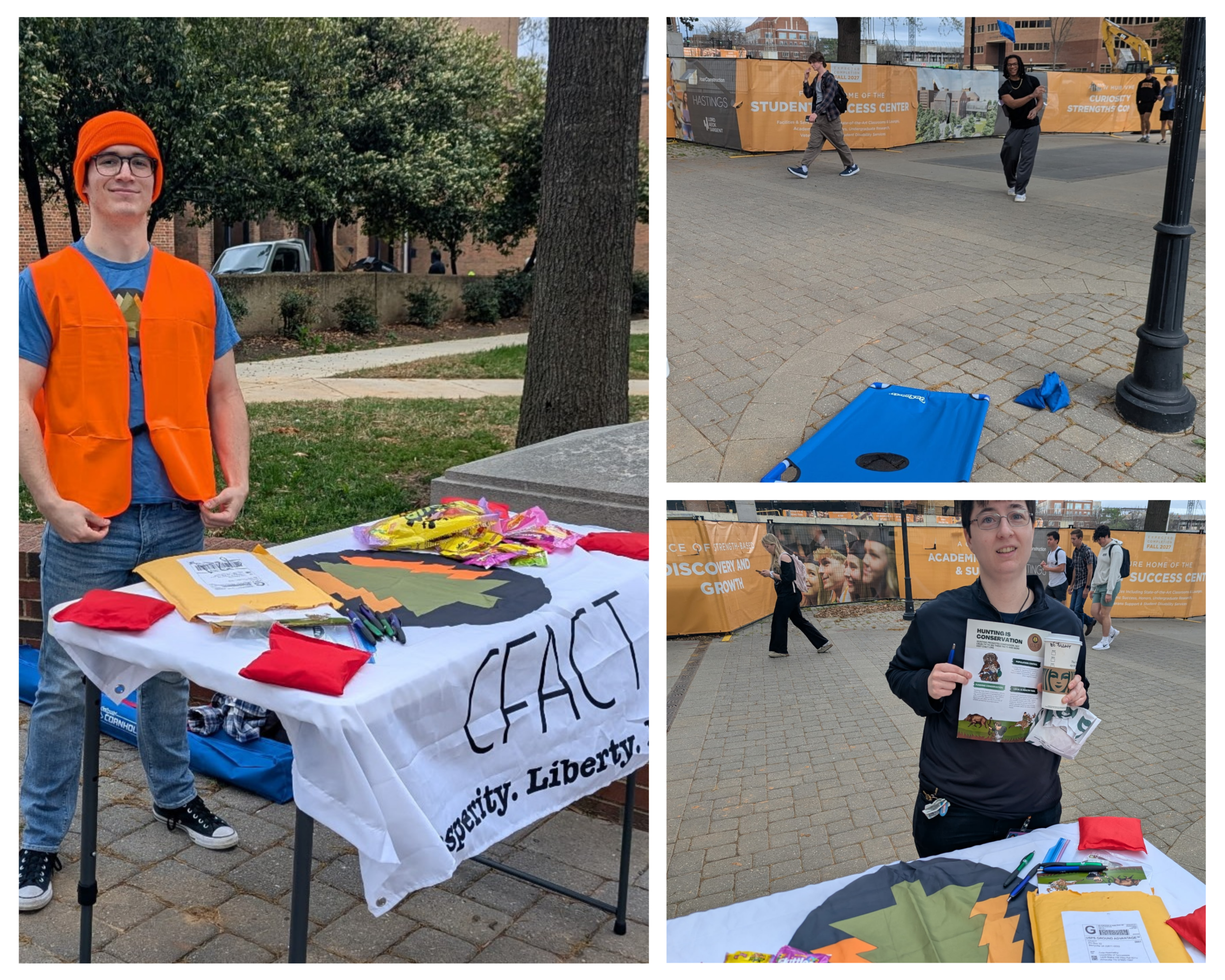
The results were as encouraging as they were educational. Students rattled off examples like kudzu, Asian carp, and Japanese beetles, while others expanded the conversation beyond state lines, citing species impacting regions as far away as New York. Even those who couldn’t name a specific species still demonstrated a solid grasp of the concept. As one student put it, an invasive species is “something not native to here, from another country.”
More importantly, the event sparked meaningful conversations about conservation solutions—particularly the role of hunting in managing invasive populations. Jude noted that many students were not only receptive, but genuinely excited about practical, results-driven environmental stewardship.
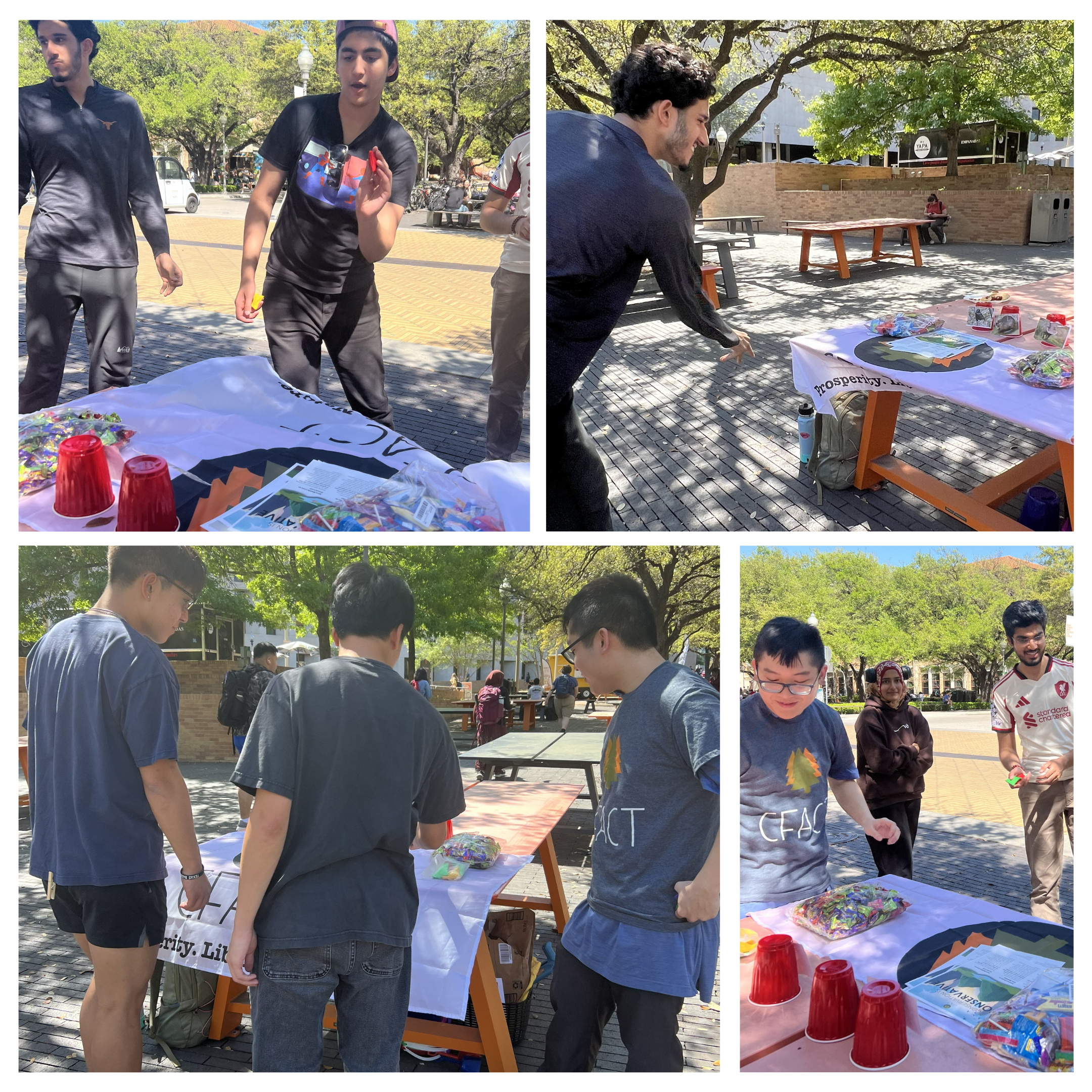
Meanwhile, at the University of Texas at Austin, collegian Thien Nguyen took a slightly different—but equally effective—approach. His version of the event turned solo cups into targets, each one marked with an image of an invasive species found in Texas. Students were invited to toss beanbags and knock the cups off the table, reinforcing the idea that direct action must be taken to protect indigenous fauna.
While the Austin event faced stiff competition from other campus activities, Thien adapted on the fly. Through direct engagement and persistence, he successfully scores of students, each of whom walked away with a better understanding of how invasive species disrupt ecosystems—and how tools like hunting can help restore balance.