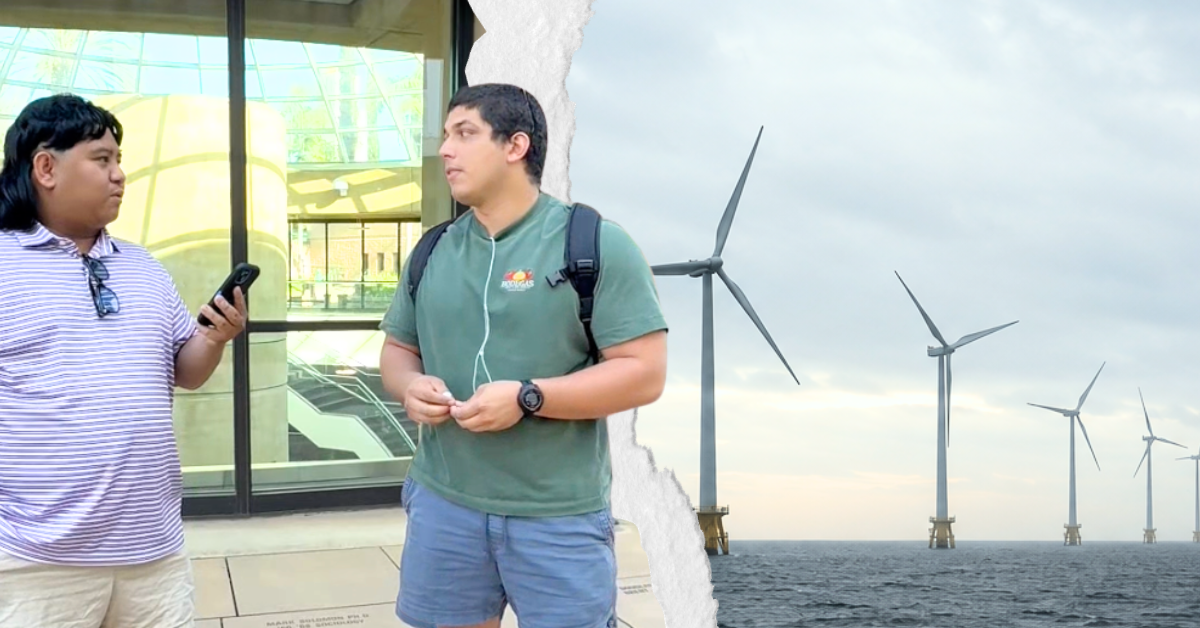
Under a crisp Maine evening sky, students gathered at the New Beginnings Church of God in Waterville for a powerful and timely discussion on the future of climate policy—one that challenged the narratives they hear every day in the classroom. Hosted by the Leadership Institute at Kennebec Community College and featuring CFACT’s own Marc Morano, the event drew a motivated audience eager to hear a different perspective on one of today’s most debated issues.
University of Maine Orono student Payton Warren coordinated and transported a group of 7 students from his campus an hour south to attend the March 10th event—an investment of time and effort that paid dividends in both knowledge and inspiration. Their presence ensured that CFACT’s voice was not only represented, but strengthened, in a region where such viewpoints are too often underrepresented.
The evening followed a tightly organized program, with doors opening just before 6:00 PM and Morano taking the stage shortly thereafter for a full-length presentation and Q&A session. From the outset, Morano commanded the room with his signature blend of humor, data, and unapologetic critique of the modern climate movement.

Titled “Death of Global Warming: The Collapse of the Climate Agenda,” Morano’s presentation walked a group of more than 15 students through a sweeping reassessment of prevailing climate claims. Drawing from decades of research and media analysis, he highlighted contradictions in mainstream narratives—pointing, for instance, to historical temperature data showing periods far warmer than today and emphasizing that climate and environmental quality are often conflated in public discourse. He also underscored America’s strong record on air quality and questioned whether top-down energy restrictions truly serve either people or the planet.
But beyond charts and statistics, Morano delivered something even more valuable: intellectual permission. Permission for students to question, to analyze, and to think independently in an academic environment that too often discourages dissent. His critique of “net zero” policies, energy restrictions, and the broader political motivations behind the climate agenda sparked a lively Q&A session, where students engaged directly with the arguments presented—testing them, challenging them, and ultimately sharpening their own understanding.
Events like this fall squarely within our collegiate program’s Climate Realism Campaign, which aims to equip students with the facts and confidence needed to push back against exaggerated climate alarmism and promote balanced, science-based discussions on campus. By bringing nationally recognized speakers like Morano directly to students, CFACT ensures that the next generation is exposed to perspectives they simply won’t encounter in lecture halls.
The success of Marc’s speaking engagement serves as a stout reminder of the growing movement of young Americans willing to ask tough questions, challenge orthodoxy, and advocate for practical, human-centered environmental solutions.