When CFACT Collegians Thien Nguyen and Tiffany Lomax set out to host energy expert Sterling Burnett on University of Texas Austin’s campus, they knew they were bringing students a perspective they rarely encounter in the classroom.
The day began over lunch at a local Asian restaurant, where the CFACT Collegians sat down with Burnett and discussed the unique challenge of how to engage young people on complex energy issues. The conversation soon expanded into Burnett’s work in energy policy, nonprofit advocacy, and the importance of educating the public on topics often overlooked in mainstream environmental discussions.
Back on campus, students gathered to hear Burnett challenge many of the assumptions that commonly shape today’s energy debate. Speaking to an audience that saw more than 40 attendees pass through over the course of the event, he made the case for nuclear power as one of the most reliable and efficient energy sources available. Burnett argued that energy discussions often fixate on emissions while overlooking the critical advantages of reliability, affordability, and performance.
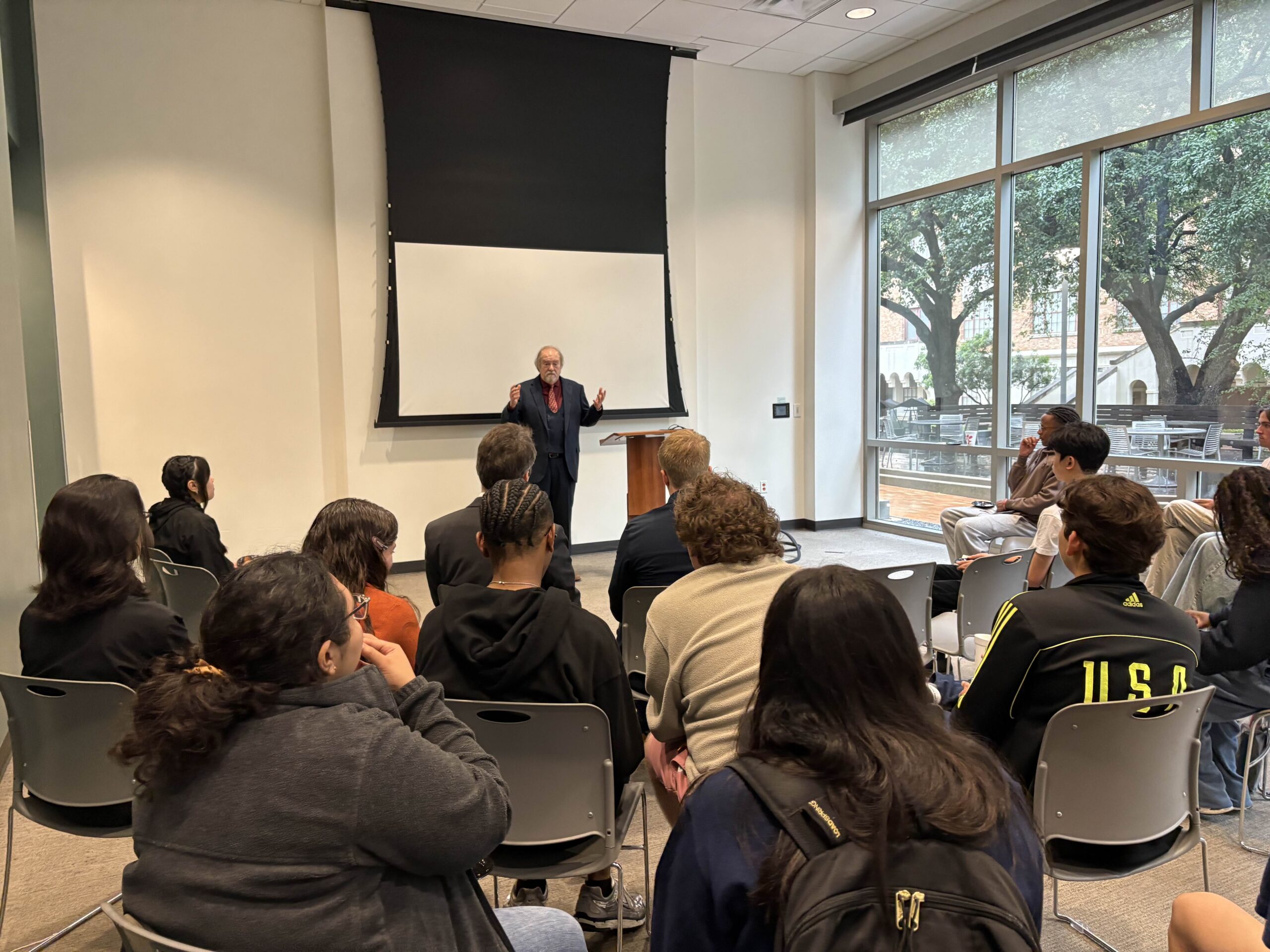
The discussion became particularly engaging when students began raising concerns about nuclear waste and how it compares to other forms of energy production.
One attendee asked why nuclear waste is treated as such a major concern when the pollution and byproducts associated with fossil fuels are often viewed as routine. Burnett responded by pointing to the remarkably small volume of waste produced by nuclear power, arguing that because it is carefully contained and managed, the occasional cost of secure transportation is minor when compared to the broader environmental and economic impacts associated with other energy sources.
For many students, the exchange highlighted an aspect of the energy debate they had never seriously considered.
College campuses are often saturated with conversations about solar panels, wind turbines, and climate targets. Far less attention is given to technologies capable of producing large amounts of dependable electricity around the clock. By bringing experts like Burnett to campus, CFACT Collegians are helping students explore those missing pieces of the conversation.