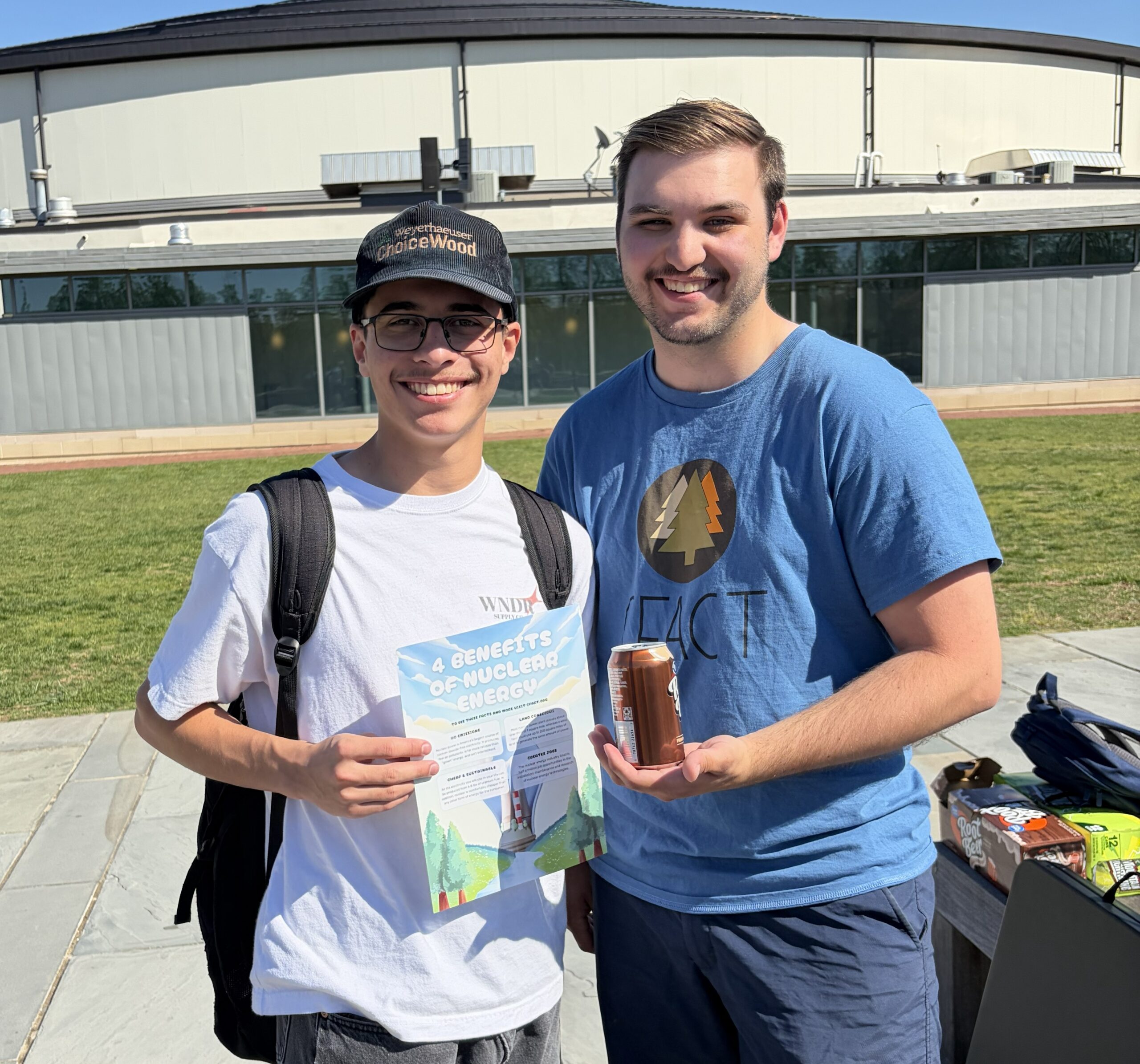
CFACT collegians brought direct, open debate to campus walkways at Florida International University and Clemson University through a series of “Change My Mind” tabling events—engaging students in substantive conversations on energy, conservation, and environmental policy.
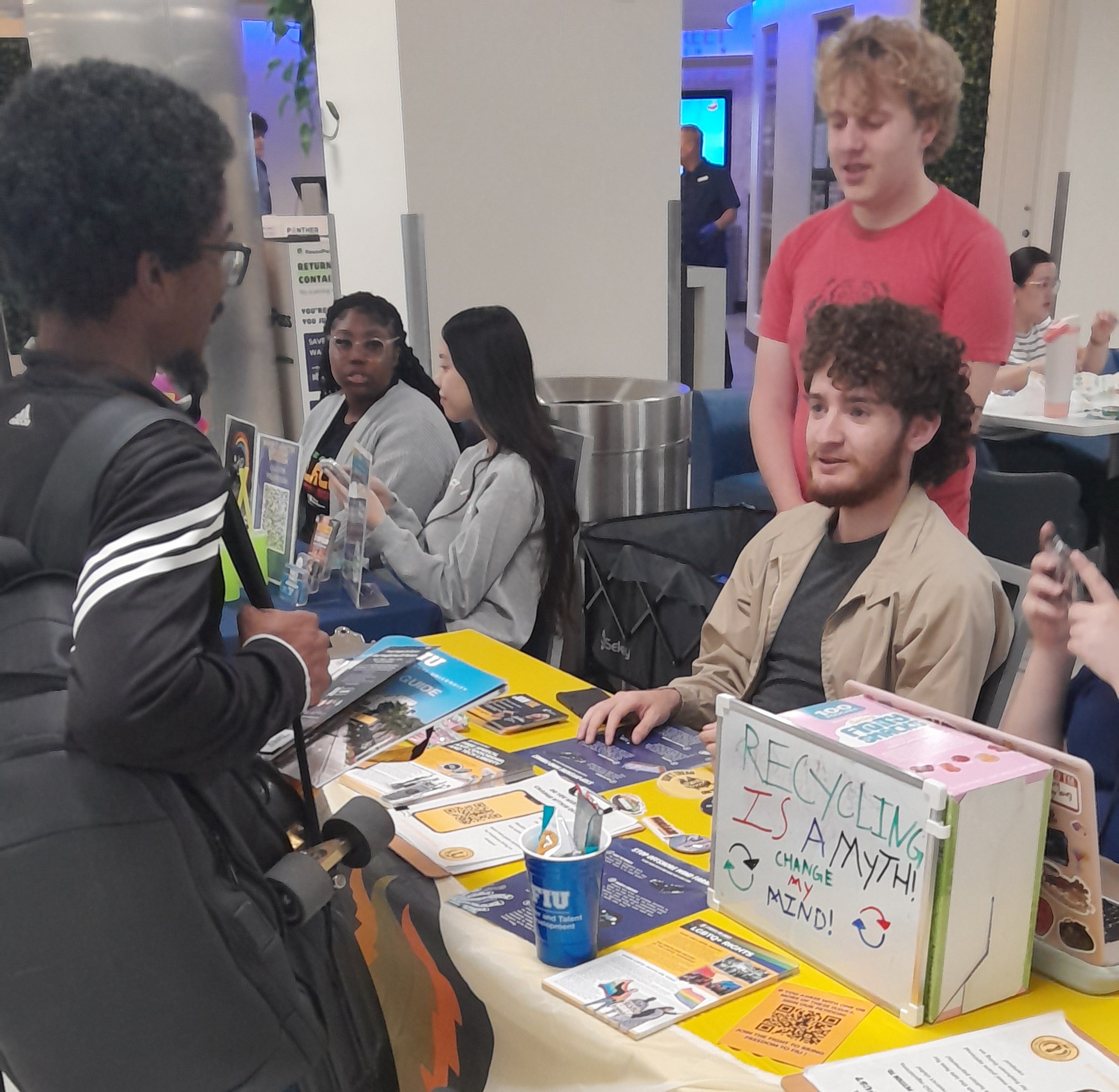
At Florida International University in Miami, campus representative Joshua Espinoza set up his table inside the Graham Center, a high-traffic student hub, and rotated between two thought-provoking discussion prompts: “Recycling is a Myth” and “Nuclear is the Future.”
Espinoza (featured in bottom panels below, center & right) was joined by a team of fellow like-minded students who helped staff the table, distribute materials, and engage passersby—expanding the event’s reach and allowing for multiple conversations to take place at once. Throughout the day, the team facilitated approximately 10 to 15 discussions with students who stopped to challenge or explore the claims.

The recycling prompt in particular drew the most attention, reflecting its deliberately provocative framing. As Joshua and his team explained to students who stopped to engage in friendly debate, the claim wasn’t that recycling literally doesn’t exist—but that the modern recycling system is widely misunderstood and often ineffective in practice. That recycling, as we understand it, doesn’t exist. They pointed to well-documented realities: only a small fraction of plastic waste is actually recycled in the United States, with the majority either landfilled, incinerated, or exported overseas. Much of what is collected in recycling bins is contaminated or economically unviable to process, leading to it being discarded despite consumers’ best intentions.
Espinoza’s team also highlighted how the system is heavily reliant on government subsidies and shifting international markets—particularly after countries like China curtailed imports of foreign waste—raising questions about whether recycling, as currently implemented, delivers the environmental benefits many assume and associate. By grounding the conversation in these facts, the team challenged students to reconsider whether feel-good environmental practices always translate into meaningful outcomes.
At Clemson University in South Carolina, campus representative Anna-Ramsey Watson (pictured below, left) brought the same debate-driven format to the Library Bridge outside the Rhodes Engineering Research Center on a beautiful sunny southern afternoon. Her prompt—“Hunting is Conservation, Change My Mind”—focused on a principle central to CFACT’s conservation philosophy: that active wildlife management, not preservationist ideology, is what sustains healthy ecosystems.
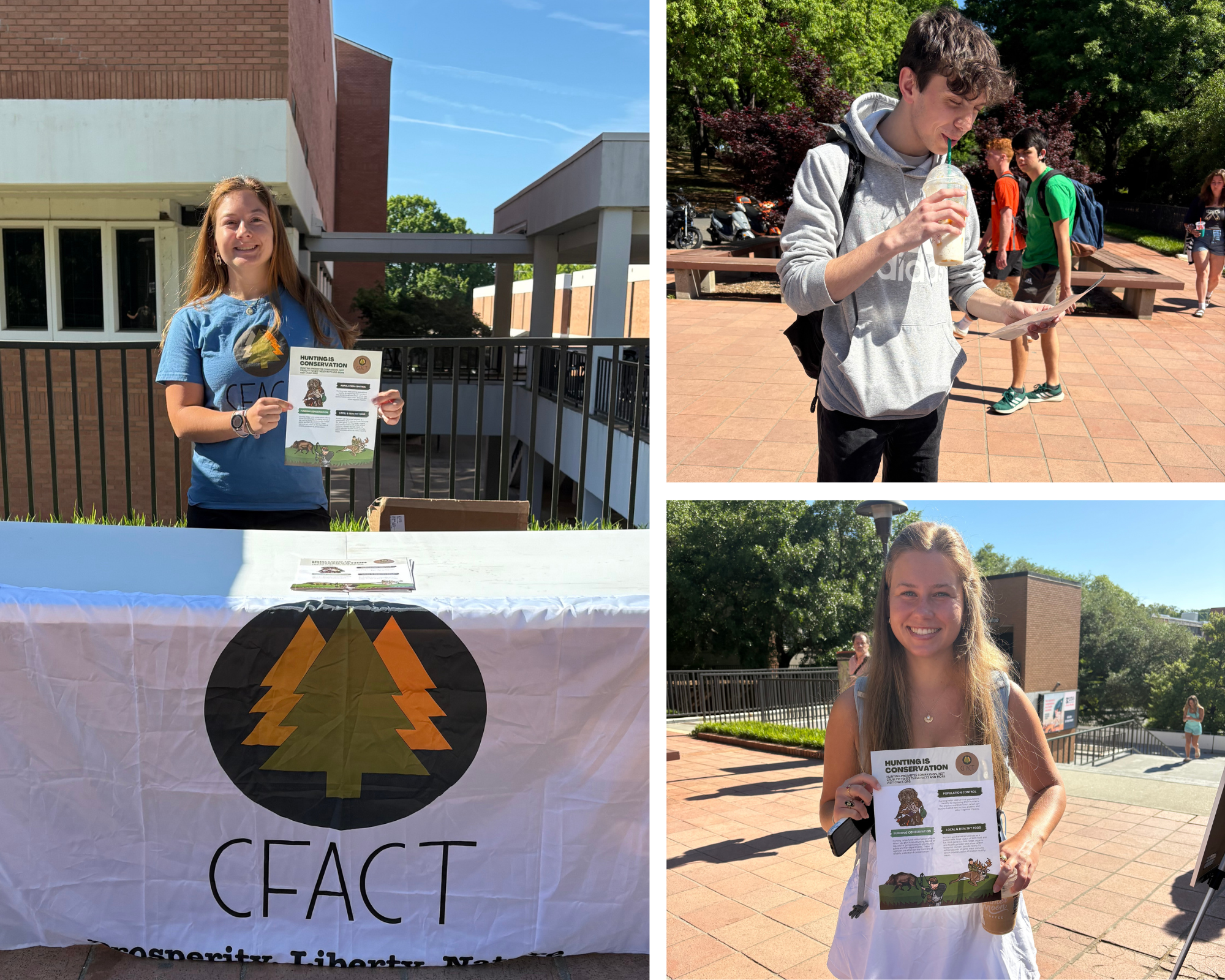
As Watson engaged passing students with colorful and informative flyers and an invitation to discuss hunting, she emphasized the practical realities behind the claim. In the United States, hunting license fees and excise taxes on firearms and equipment generate billions of dollars for conservation through programs like the Pittman-Robertson Act, directly funding habitat restoration, species monitoring, and state wildlife agencies. Regulated hunting also plays a critical role in controlling overabundant species—such as deer and feral hogs—preventing habitat degradation, crop damage, and broader ecological imbalance.
While the topic invited discussion, few students directly challenged the premise. Instead, many participants—including those who typically disagreed with CFACT’s broader viewpoints—expressed surprise at finding common ground once the facts were laid out. Watson engaged dozens of students throughout the event, while the table’s high-visibility location drew interest from campus tours, prospective students, and visiting families.
Both events reflect a growing emphasis within the CFACT Collegians program on structured, face-to-face engagement. The “Change My Mind” format, outlined as part of CFACT’s Free Market Energy campaign, is designed to promote critical thinking and civil discourse by encouraging students to actively defend or reconsider their positions in real time.