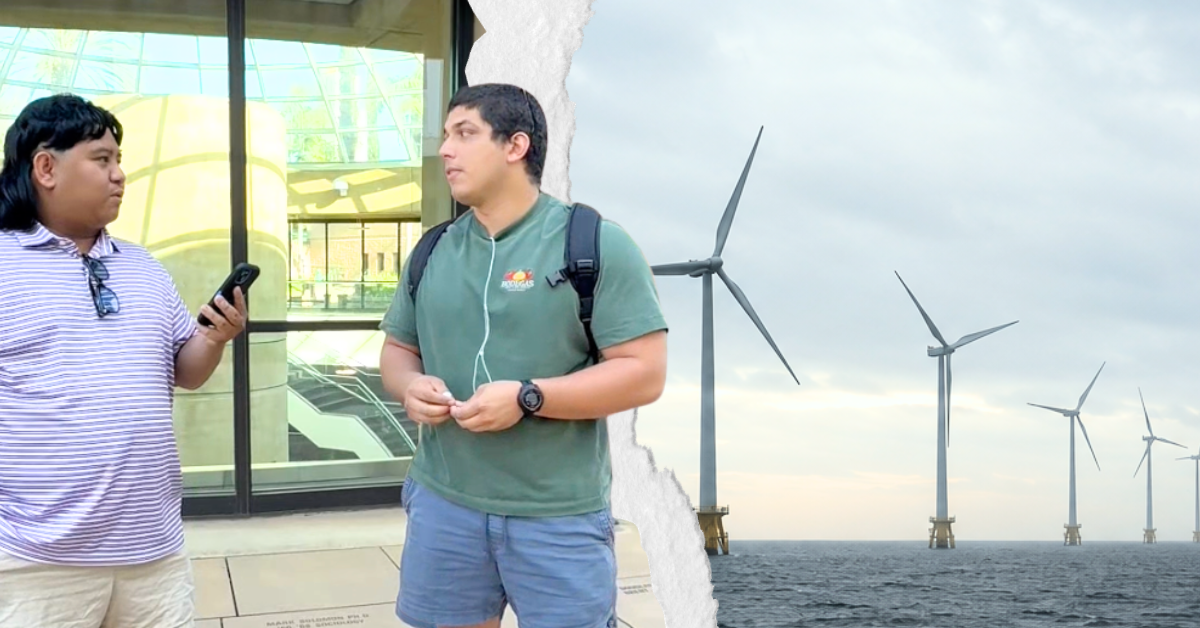
CFACT Collegians are proving once again that meaningful conversations about energy don’t have to happen in lecture halls—they can start with something as simple as a spin of the wheel and a piece of candy.
At the University of Arizona, campus representative Ashlee Mendola (pictured above) brought nuclear energy education straight to the heart of campus life. Setting up on the busy mall near the student union, Ashlee invited passing students to test their knowledge with a colorful prize wheel featuring nuclear energy trivia. The concept was simple: answer a question, win some candy—but the impact ran much deeper.
Ashlee reported engaging with around twenty students throughout the day, many of whom were eager to participate and, surprisingly, already had a baseline understanding of nuclear energy. What started as a quick game often turned into extended conversations, with students lingering at the table to discuss energy sources, ask questions, and challenge what they thought they knew.
“I loved interacting with different students and seeing how hesitant some were to bring up the benefits of nuclear energy with all the misinformation out there,” Ashlee noted. “Being able to confirm they were right and seeing their surprise was really rewarding!”
Those moments of hesitation followed by validation are exactly where CFACT Collegians thrive—cutting through confusion and giving students the confidence to question dominant narratives.
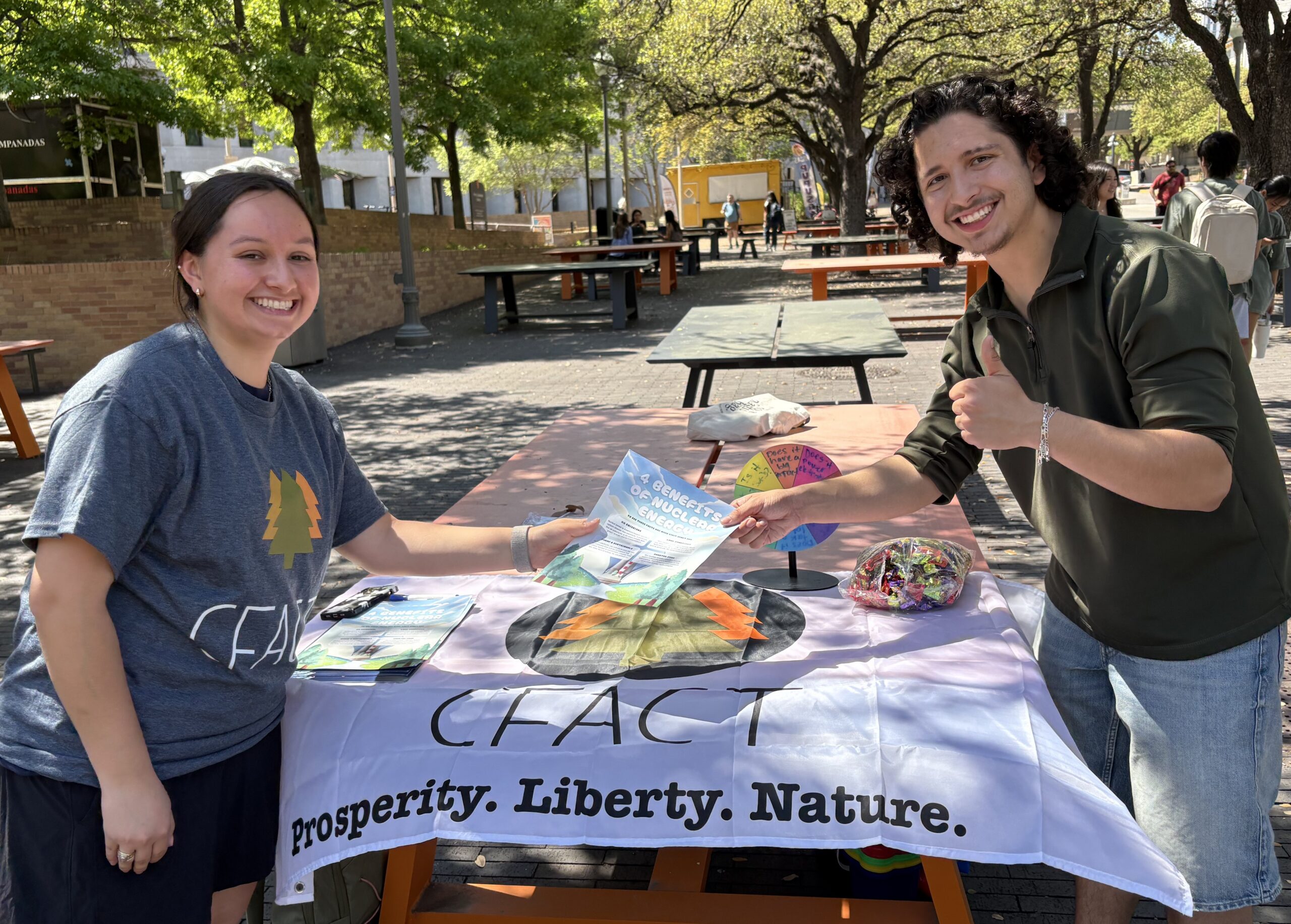
Meanwhile, at the University of Texas at Austin, collegian Tiffany Lomax took a similar approach, setting up her own Nuclear Prize-Wheel Candy Quiz along the bustling “Speedway” near the campus library. With steady foot traffic and curious students passing by, Tiffany transformed a simple table into a hub of energy education.
Over the course of the afternoon, Tiffany interacted with students, many of whom were caught off guard by the facts they encountered. The trivia format once again proved to be a powerful tool—not just for engagement, but for breaking down complex topics into something approachable and memorable.
As Tiffany described it, “We turned nuclear energy curiosity into a fun, interactive trivia game, we sparked interesting discussions and challenged common misconceptions.”
That ability to take a topic often portrayed as intimidating or controversial and make it accessible is a hallmark of CFACT’S collegiate program. Students didn’t just walk away with candy—they left with a clearer understanding of nuclear energy’s role in providing reliable, efficient power.