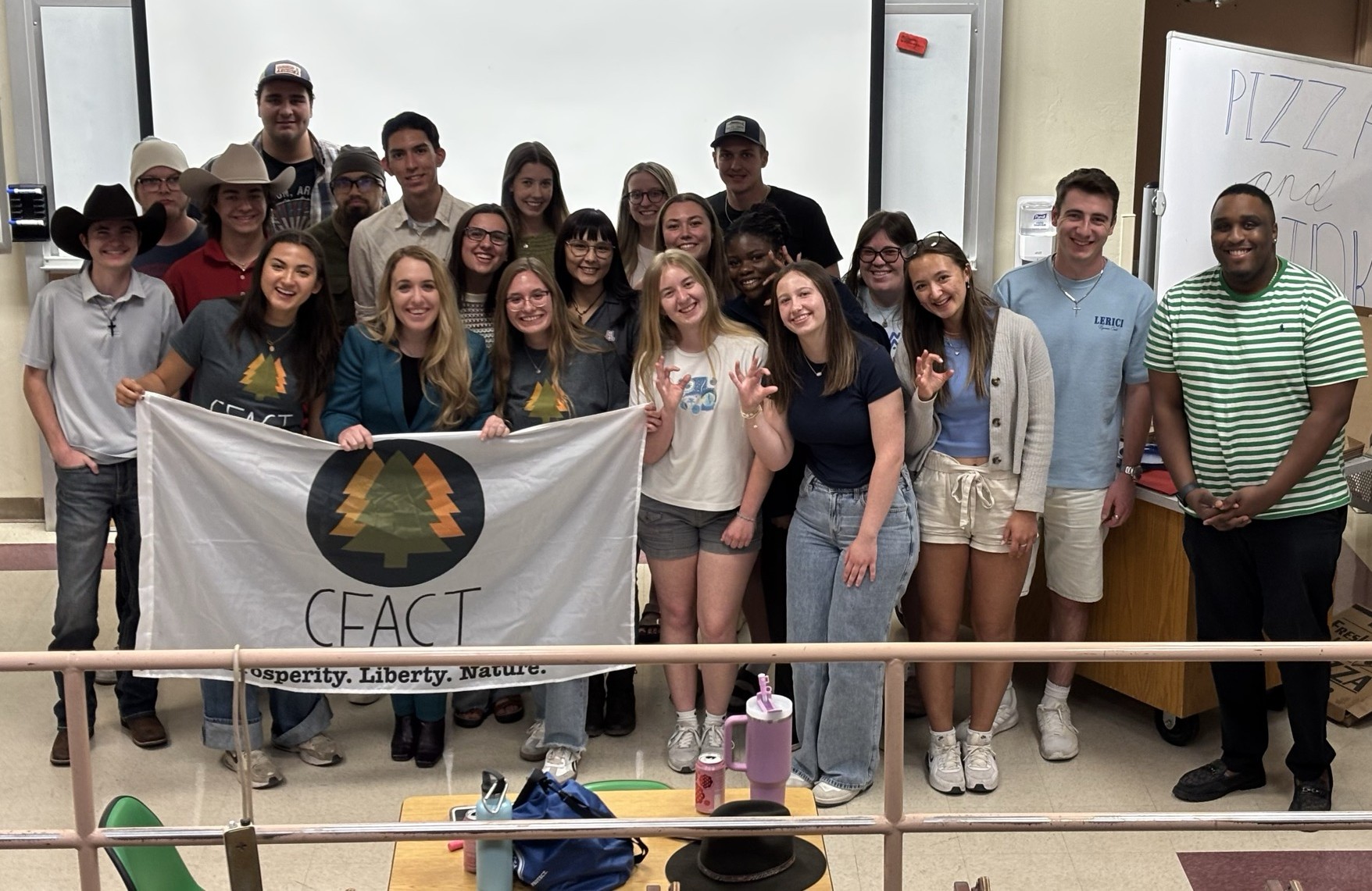
In early March, students at University of Arizona had the opportunity to hear from one of the leading voices in free-market environmentalism when policy expert Gabriella Hoffman visited campus to speak about the conservative roots of conservation and the future of sensible energy policy.
Hoffmann’s visit began the day before her presentation with a small group of students eager to spend time with the visiting speaker outside the classroom. On Thursday afternoon, Hoffmann joined a group of students, including CFACT campus representatives Elliot Taylor and Ashlee Mendola for a hike through the breathtaking desert landscape of Saguaro National Park, giving students a chance to experience firsthand the type of natural beauty conservation efforts seek to protect.
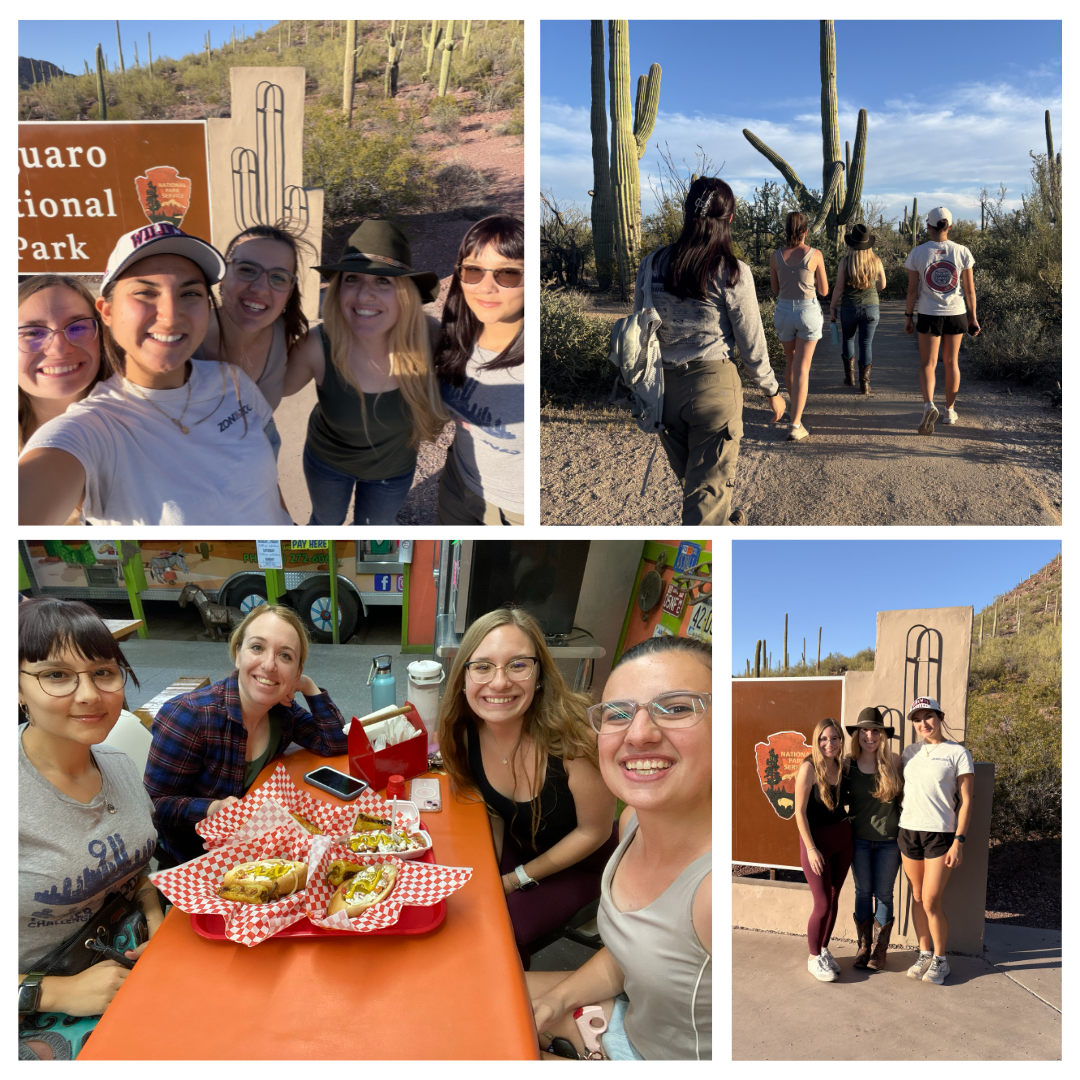
After the hike, the group continued their conversation over dinner at a local Mexican restaurant, discussing environmental policy, careers in advocacy, and the growing role young Americans can play in shaping conservation’s future.
The following evening, Hoffmann delivered her presentation, “Conservation is Conservative,” to a crowd of roughly 25–30 students. The event was co-hosted by CFACT and the Network of Enlightened Women, bringing together students from a variety of majors interested in learning more about environmental stewardship from a perspective rarely heard on today’s college campuses. Pizza and soda were served as students gathered to hear Hoffmann explain why conservation has long been a cornerstone of conservative thought.
Throughout her talk, Hoffmann challenged the common narrative that conservatives are indifferent—or even hostile—to environmental protection. She walked students through the long history of conservative leadership in conservation and explained how the modern environmental movement has often mischaracterized conservative principles. According to Hoffmann, good conservation does not require expanding government control or stifling economic growth. Instead, it thrives when innovation, private property rights, and free-market solutions are allowed to flourish.

She also addressed several misconceptions frequently promoted by the eco-left, including the claim that conservatives support pollution or oppose the protection of wild spaces. In reality, Hoffmann explained, many conservative approaches emphasize practical stewardship, responsible resource development, and policies that balance environmental protection with economic prosperity.
A key theme of the presentation was the intersection between conservation and energy policy. Hoffmann argued that sensible environmental stewardship can coexist with strong domestic energy production, particularly when policies prioritize deregulation, technological innovation, and an America-first approach to energy security. By supporting responsible industry alongside environmental stewardship, she explained, policymakers can achieve both conservation goals and economic growth. Conservation is not, nor should it be anti-capitalist.
Following the presentation, students eagerly took part in a Q&A session, raising questions about everything from wildlife management to federal environmental regulations. Many attendees remained after the formal program ended to continue the conversation, speaking with Hoffmann for nearly an hour as they discussed environmental policy, career opportunities, and the challenges facing today’s conservation movement.

Reflecting on the event, Ashlee Mendola said the interactive discussion was a highlight of the evening. “My favorite part of the event was the opportunity Hoffmann gave students to ask her any and every question they had about the environment and conservation,” she said. “She was more than willing to share her knowledge on any topic presented!”
Thanks to the efforts of our Arizonian CFACT Collegians and Gabby, dozens of students at the University of Arizona left the event with a deeper understanding of how conservation principles align with conservative values—and why the future of environmental stewardship depends on innovation, free-markets, and individual responsibility.