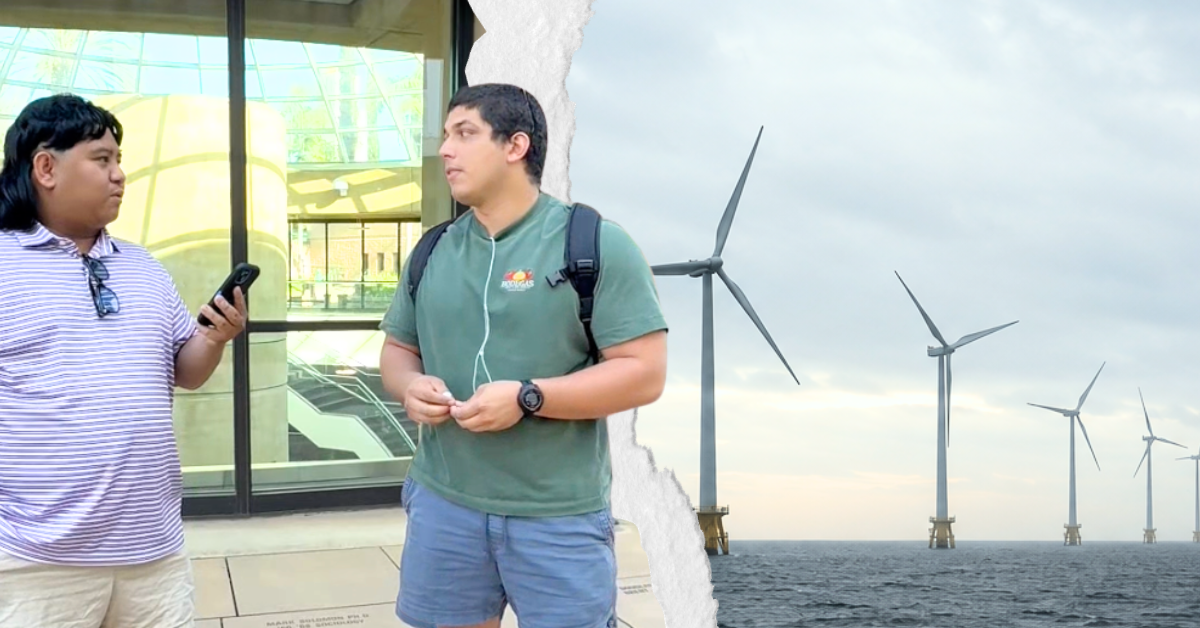
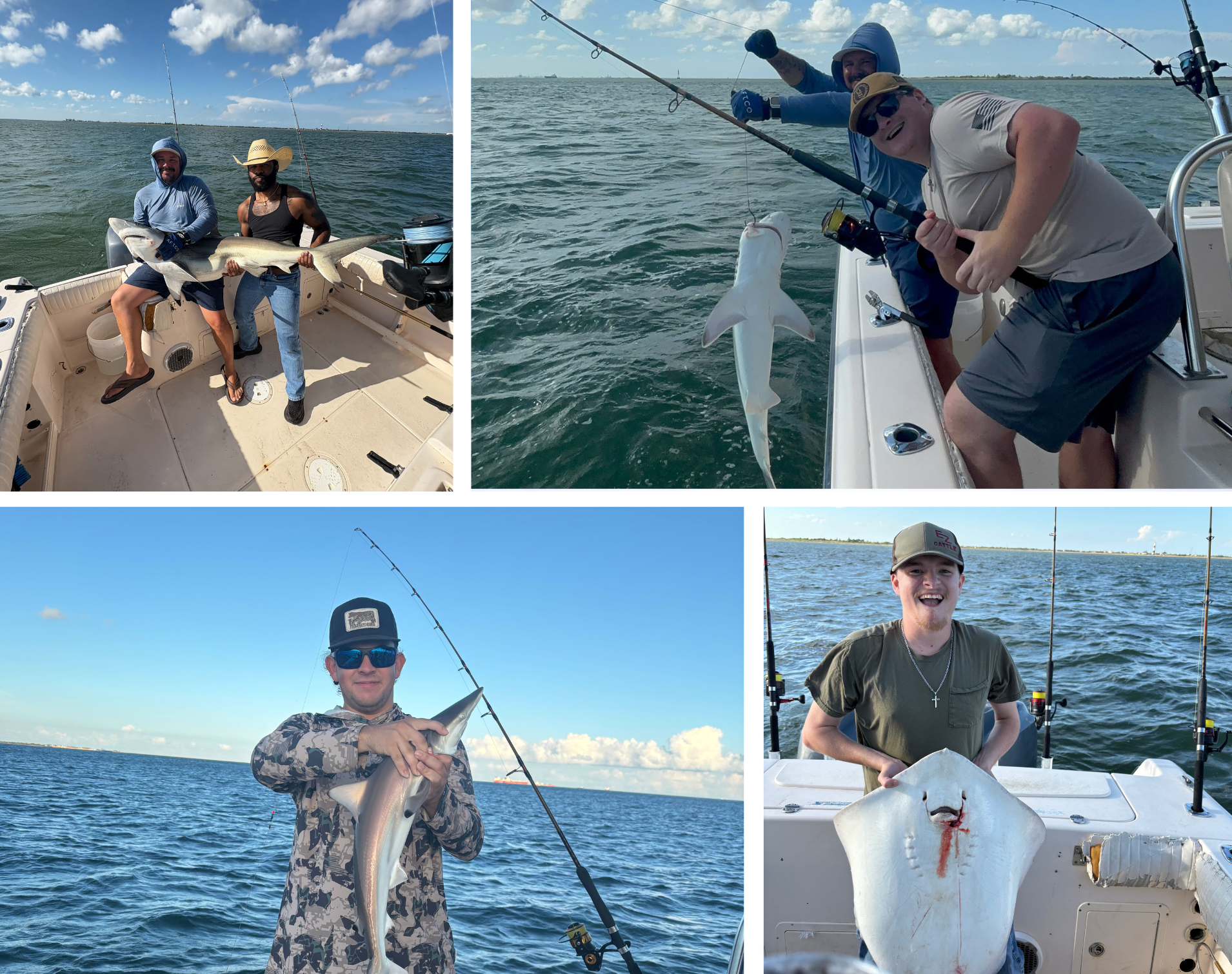
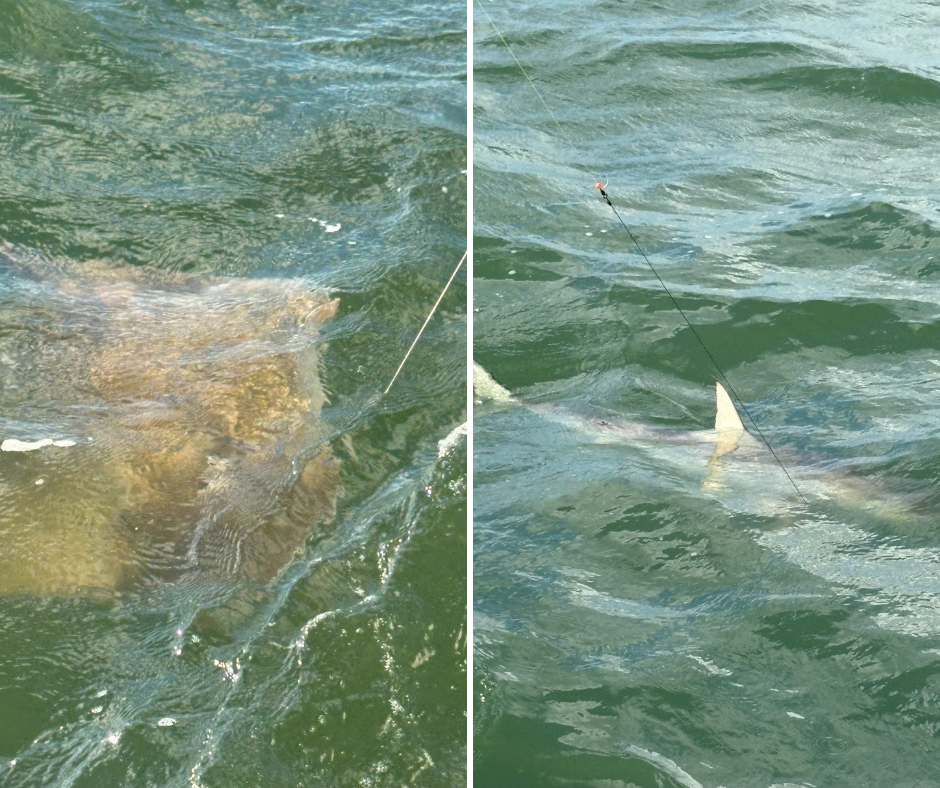
On October 18, CFACT Collegian Nyle Torpy led a group of four other students from Sam Houston State University on a saltwater fishing expedition off the coast of Galveston, Texas. Sponsored by CFACT and hosted by Reel Men Fishing Charters, the four-hour trip offered more than just the thrill of catching sharks and stingrays—it gave students a firsthand look at how conservation, commerce, and energy policy intersect in one of America’s most industrious ports.
“Heading down to the docks was exceptional,” Nyle recalled. “Meeting with gather local fishermen who corral there before preparing for evening fishing… we were ecstatic to get a chance to see and experience the livelihoods of a large portion of Galveston’s civilian business.” Their captain, a veteran seaman affectionately known as “Cajun” Derek, shared his perspective on both marine ecology and the political challenges facing Gulf Coast fisheries when interviewed by Nyle.
When asked about the proposed offshore wind farm slated for construction near Galveston Island, Captain Derek didn’t mince words:
“I think it’s terrible. Just like a lot of stuff they do. Those wind farms are just… it’s not going to be good. Between the vibrations affecting sea life—you know, dolphins and whales struggle with the noises. If you’ve ever been around wind farms you’d know it’s constant noise… terrible idea.”
Instead, Derek argued that real solutions lie in sound engineering and reliable energy infrastructure. “I’d rather them build a nuclear plant on Pelican Island than putting in windmills up there,” he said. “They only have a twenty-year shelf life… it’s fiberglass, they can’t do anything with them. And the oil that they use and leak, terrible for everything.”
The discussion soon turned from energy to economics. Watching cargo ships glide through the channel, Derek reflected on America’s trade habits:
“We want export. We need to get out of that consumer lifestyle. It’s unfortunate that my generation is known as a ‘consumer.’ We need to conserve more than we consume… I want to see the ships loaded down and headed out of here—that’s when we’re making money as a country.”
Beyond economics and energy, the day also highlighted the conservation ethics practiced by Gulf fishermen. When Nyle asked about the role of catch-and-release culture in his day-to-day life, Derek explained:
“I’m all about catch and release… if someone doesn’t want to keep anything they catch, I’m ok with that so long as we put the fish back the way we found them. The less we take of seasonal fish, the better. They’re all big fish—they’re all making a million babies.”
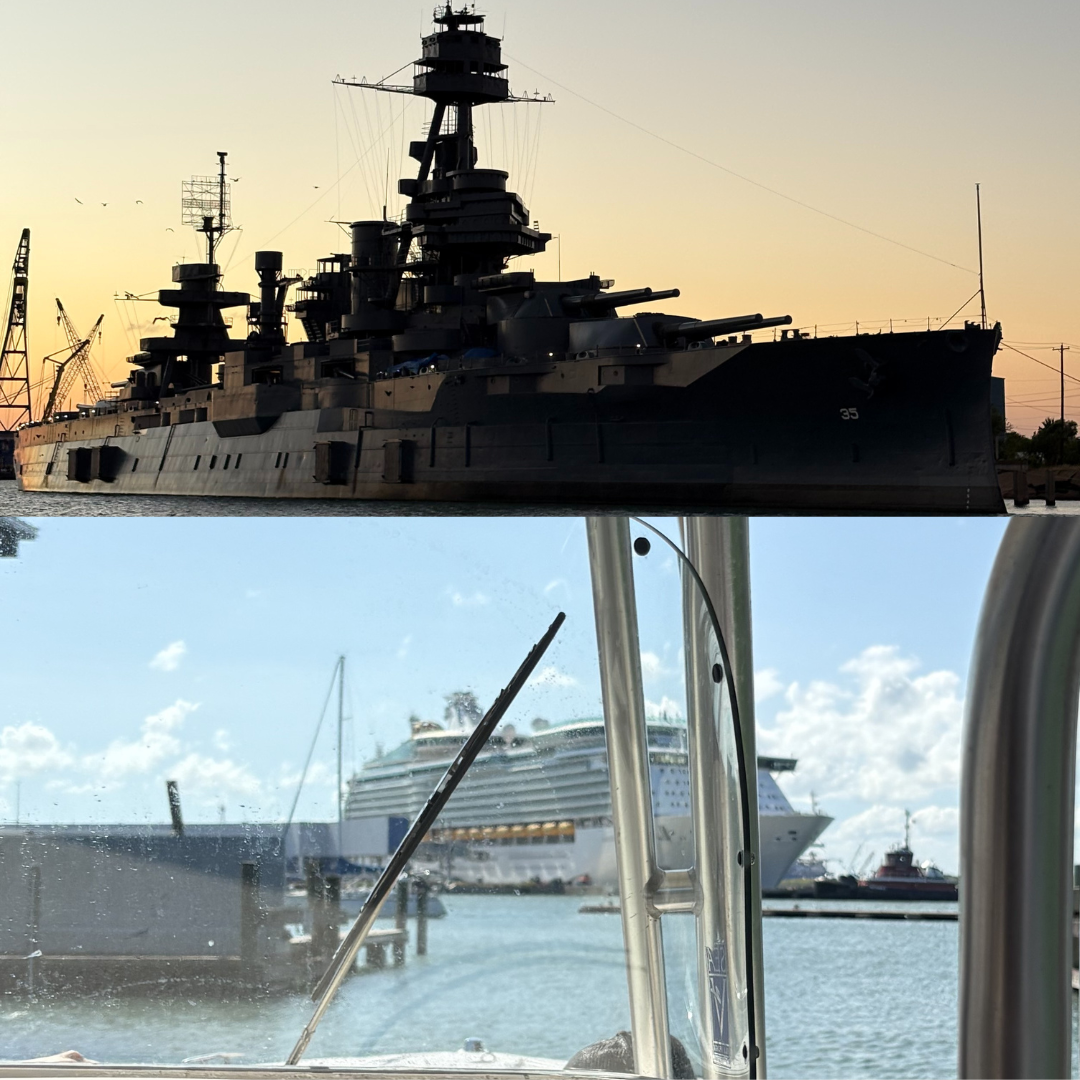
As the group began their journey, they passed a Royal Caribbean cruise ship boarding eager vacationers. As they motored back to port, they spotted the USS Texas docked for repairs—a striking reminder of the region’s deep maritime heritage and the enduring relationship between Texans and the sea. For Nyle and his team, the trip underscored what real conservation looks like in practice—real people, real ecosystems, and real economic stakes.
Through efforts like this, CFACT Collegians are showing that economic, energy, and conservation awareness isn’t confined to classrooms or campus tabling—it’s alive on the water, in the field, and in the hands of those who know the land and sea best.