If you happened to be walking across campus at the University of Tennessee at Chattanooga last week, you may have noticed something unusual under your feet.
Not profanity.
Not doom-and-gloom warnings.
Not apocalyptic predictions in red paint.
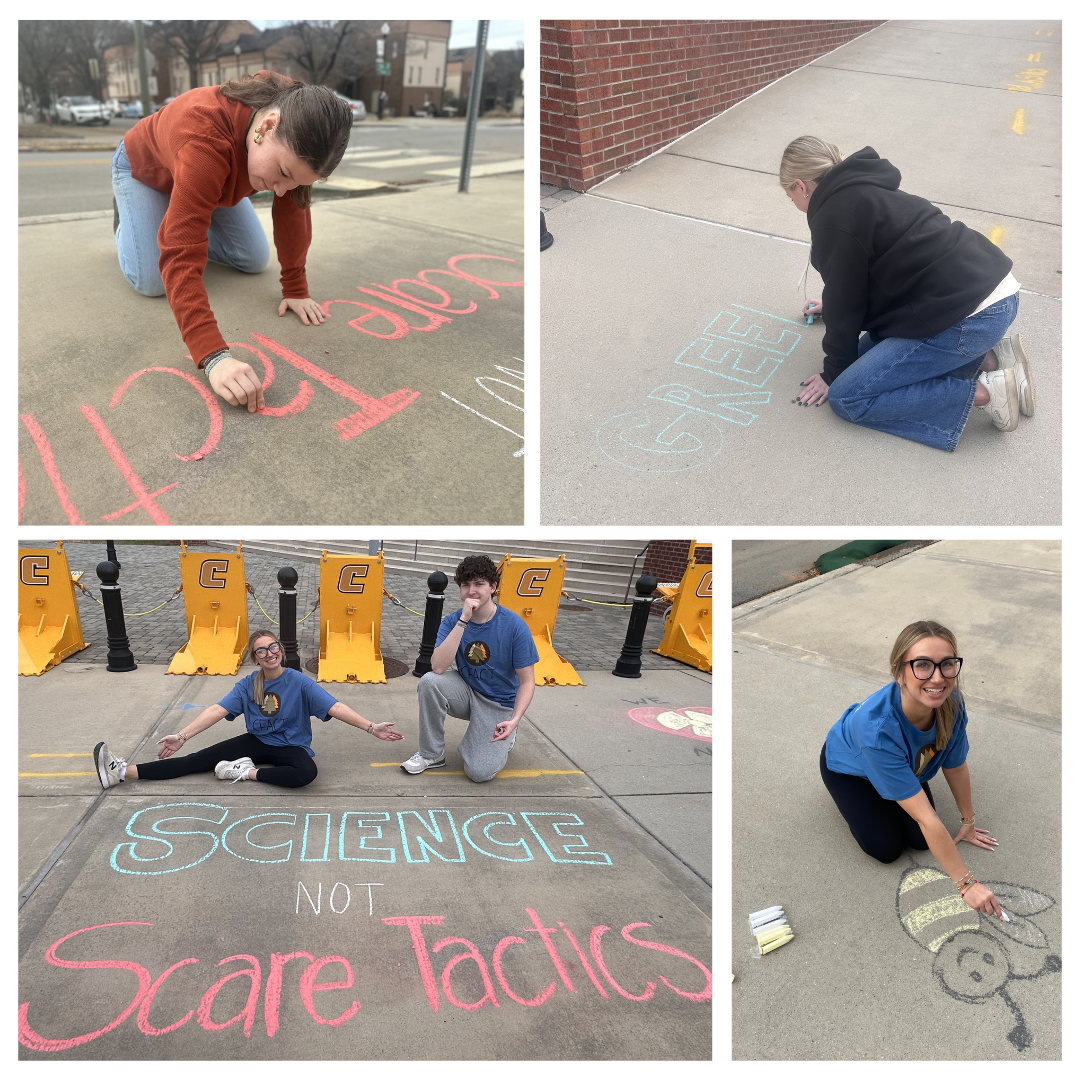
Instead, bright chalk lettering declared:
“I Love Nuclear.”
“Green Energy, Red Results.”
“Science, Not Scare Tactics.”
That splash of color was the handiwork of CFACT campus representatives Sophie Fuller and Markus Fee, who launched the semester with a simple but highly visible sidewalk chalk campaign that tied in topics and issues from each of CFACT’s four core policy focuses.
With more than ten students joining in, the event turned ordinary campus concrete into a colorful canvas. Some participants focused on careful lettering, others leaned into bold designs, but the goal was unified: bring CFACT’s message free-market environmental stewardship into the everyday rhythm of student life.
There’s something strategic about chalk. It’s not confrontational. It doesn’t block entrances or shout down speakers. It simply appears — woven into the path students are already walking. And because it’s unexpected, it invites curiosity.
Sophie made sure those curious glances became conversations, handing out CFACT flyers and engaging students who stopped to ask questions.
Meanwhile, Markus documented the afternoon’s momentum through photos, capturing the collaboration and creativity as messages took shape.
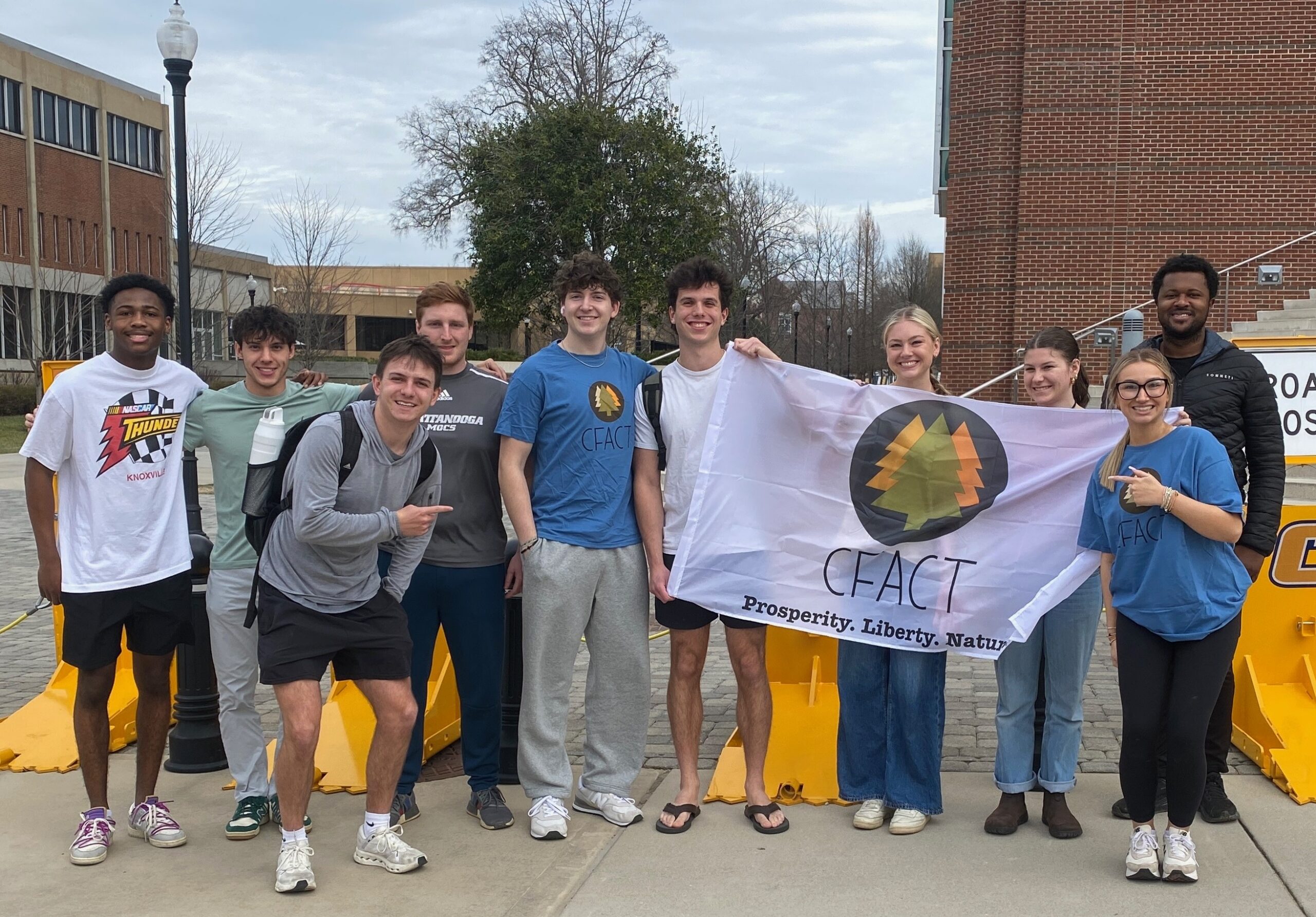
The group wrapped up the event gathered around the CFACT flag, marking what Markus described as, “a perfect event to kick off the semester!”
What makes this effort especially meaningful is its tone. At a time when environmental discussions on campus often revolve around alarmism and mandates, Sophie and Markus chose a different approach — optimism, stewardship, and confidence in innovation. Nuclear energy. Free market innovation. Science over scare tactics.
No screaming matches or protests required.
Thanks to our supporters, CFACT Collegians at UT Chattanooga are proving that campus culture can be influenced without hostility — and that sometimes the most effective activism begins with nothing more than a box of chalk.