College campuses are saturated with climate slogans, but far less often with climate context. At the University of Tennessee Knoxville (UTK), CFACT Collegian Emma Arns set out to change that — not with a lecture, but with a microphone, a camera, and two graphs most students had never seen before.
Emma began by asking passing students, “Do you believe in man-made climate change?” Like students on campuses across the country, most responded with certainty that today’s climate conditions are abnormal and driven by modern human activity. These views were offered confidently, reflecting just how thoroughly climate alarmism has been absorbed as unquestioned truth in higher education.
Then Emma changed the dynamic.
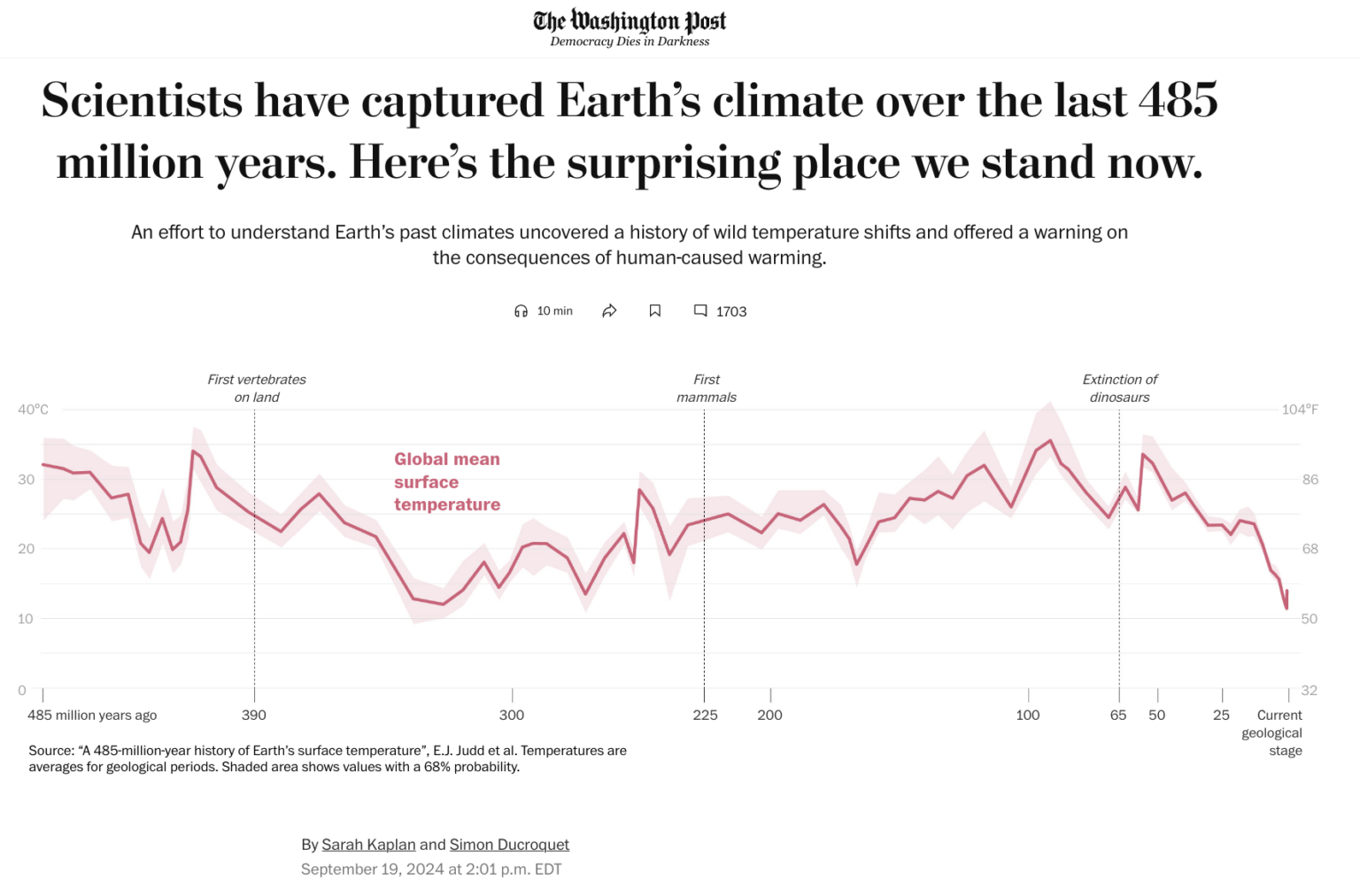
She first showed students a sweeping visualization of global temperatures over nearly 485 million years, adapted from a Washington Post analysis. The chart showed our planet has warmed and cooled dramatically over geological time, surviving ice ages, tropical periods, and mass extinctions — all without human influence. Faced with the full historical timeline, students slowed down. Conversations paused. Eyes moved from the microphone to the data.
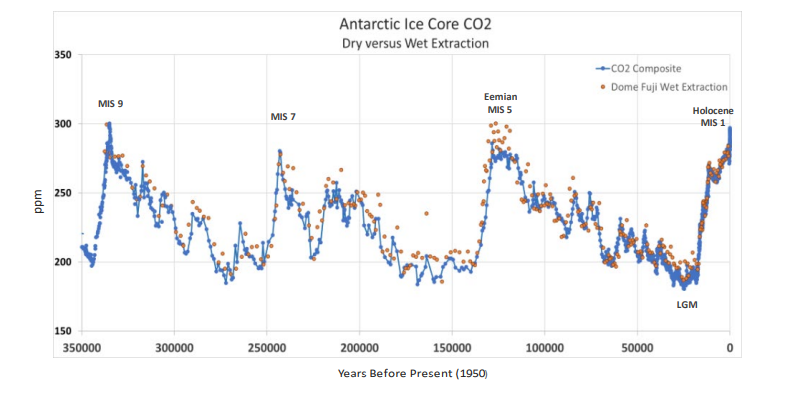
In other interactions, Emma introduced a second graph displaying Antarctic ice core CO₂ levels stretching back hundreds of thousands of years. The chart revealed a repeating pattern of rises and falls in atmospheric carbon dioxide long before factories, cars, or power plants existed. Placed alongside the temperature record, the data added another layer of historical context that few students had encountered before.
With hard data in front of their faces, the graphs had a noticeable effect. Students who spoke in absolutes moments earlier, now reconsidered their language. The certainty softened and questions replaced slogans. What had been framed as an unprecedented emergency to them their entire lives suddenly looked more like one chapter in a very long, very complex climate story.
This is where CFACT Collegians excel. Emma didn’t argue or browbeat. She didn’t tell students what to think. She simply presented information that is rarely shown in classrooms or campus activism and let students grapple with it themselves. The shift was immediate and visible. Every student interviewed quickly recounted their earlier claims. One girl even exclaimed, “I didn’t know that there were spikes (in temperature) before!
These interviews highlight a simple truth: many students are not hostile to facts — they’ve just never been given them. When presented with real data and historical context, the doomsday narrative loses its grip, and curiosity takes its place.
Emma Arns’ work at UT Knoxville is a textbook example of CFACT’s Climate Realism Campaign in action. By replacing fear with perspective and ideology with evidence, she helped move the conversation from climate hysteria toward critical thinking — one student at a time. The full interview is posted on CFACT’s YouTube channel.