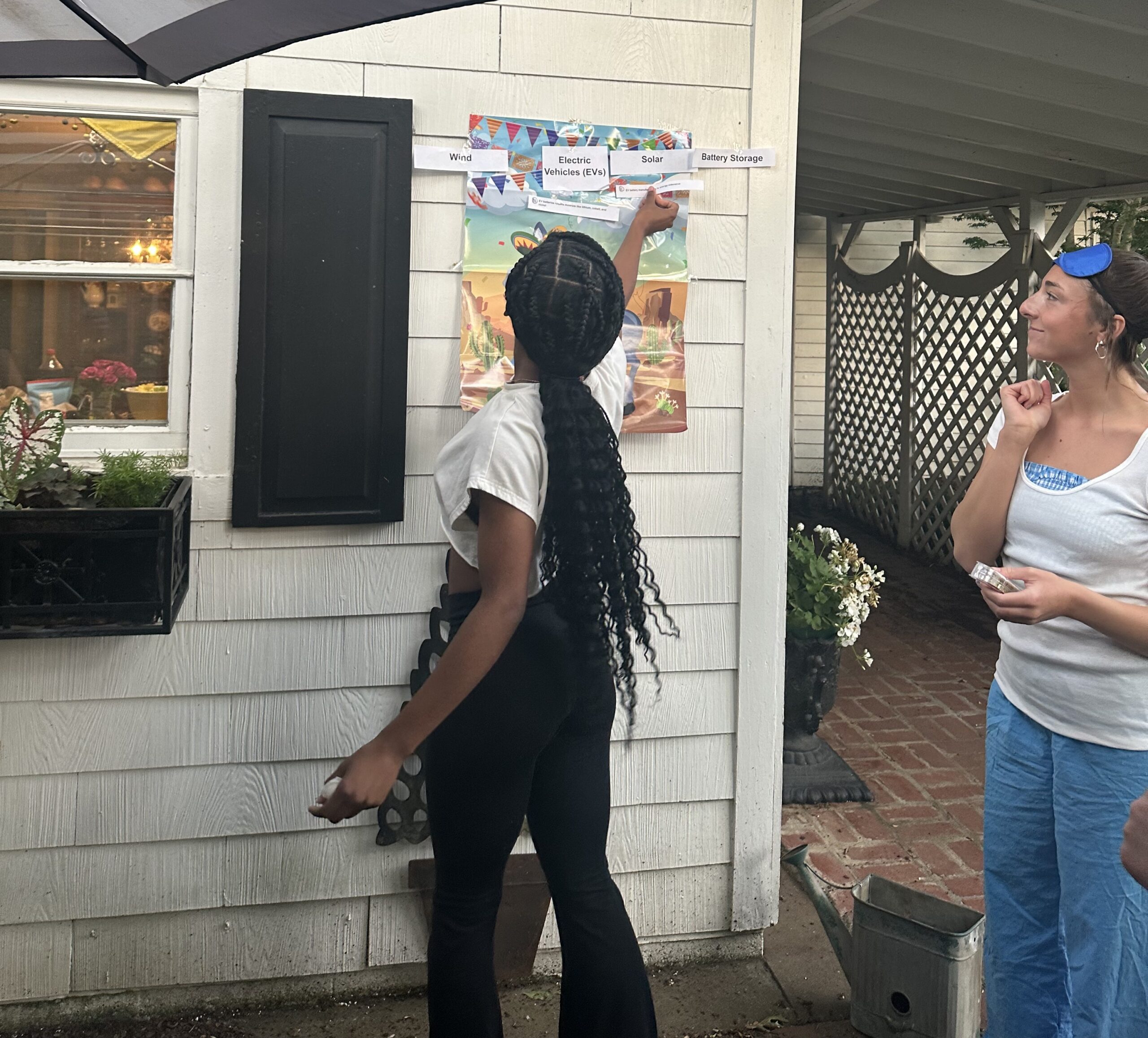
CFACT Collegians Anna-Ramsey Watson of Clemson University and Taylor Elliott of Lipscomb University recently brought CFACT’s “Green Energy Kills” message to their fellow students with a creative twist: “Pin the Tail on the Energy Donkey.”
The game challenged students to match the negative consequences of so-called “clean energy” with the energy sources responsible for them. Students were given slips of paper listing harmful effects connected to wind and solar power, then asked to “pin” each one to the correct energy source. The result was an interactive lesson in a truth rarely taught on campus: “green” does not mean clean.
Taylor hosted her event (featured above) on April 30 at an off-campus house surrounded by a lush backyard garden, where nine students gathered to test their knowledge of modern energy. According to Taylor, the game featured 15 negative effects of clean energy, giving students a chance to learn which sources were responsible for each problem.
“We also discussed possible solutions and the reality that the modern climate change narrative is a myth,” Taylor reported.
Students left with a stronger understanding of the environmental costs hidden behind the renewable energy lobby’s favorite slogans. One attendee, Ella, summed up the event’s impact well: “I never knew there were so many negative effects of clean energy, and that animals are the most harmed from it.”
Meanwhile at Clemson, Anna-Ramsey’s “Pin the Tail on the Energy Donkey” event drew strong engagement from students passing by her table. Several students asked how they could get involved with CFACT, while others were surprised to learn that wind and solar come with serious consequences of their own.
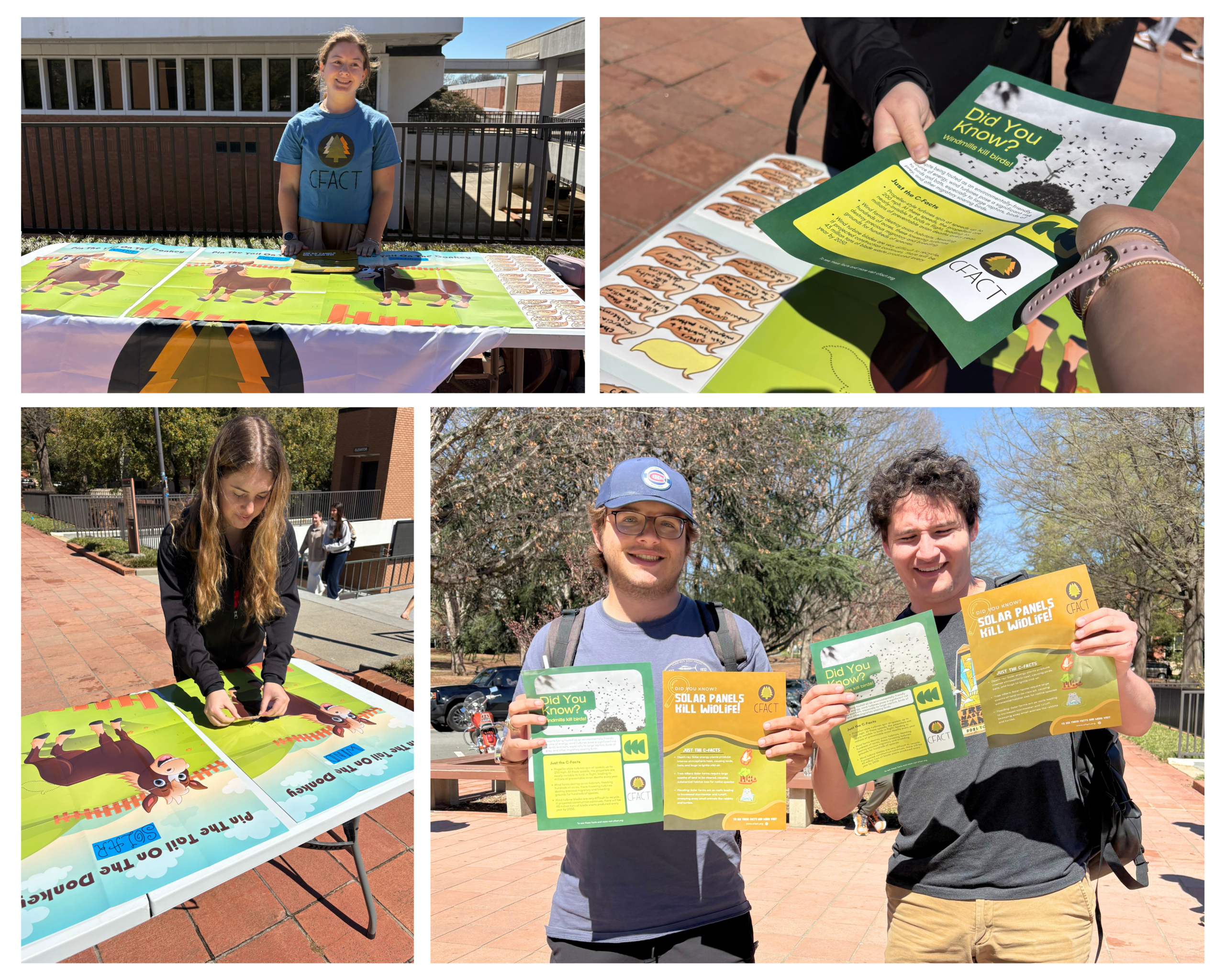
According to Anna-Ramsey, many students had wrongly attributed the damage caused by wind and solar to traditional energy sources instead. After playing the game, they were shocked to discover the real-world environmental costs of “clean” energy.
Anna-Ramsey used the opportunity to hand out flyers, correct misconceptions, and explain CFACT’s core message that “green isn’t clean.” One student even asked where CFACT stood on nuclear energy and was thrilled to hear that CFACT is proudly pro-nuclear.
“That’s awesome! Nuclear is the future,” the student said.
Both events gave students a fun, hands-on way to challenge the campus climate narrative and think critically about the energy sources America needs. Thanks to Anna-Ramsey and Taylor, more young Americans now understand that reliable energy, nuclear power, and honest environmentalism beat green energy fairy tales every time.