For years, campus activists and administrators have tried to sell the public a fiction: college students are unanimously devoted to “green” energy mandates and climate alarmism, and anyone who questions the prevailing narrative is some kind of relic of the past.
UT Austin student and CFACT Collegian intern Thien Nguyen decided to test that assumption the old-fashioned way—by asking students directly.
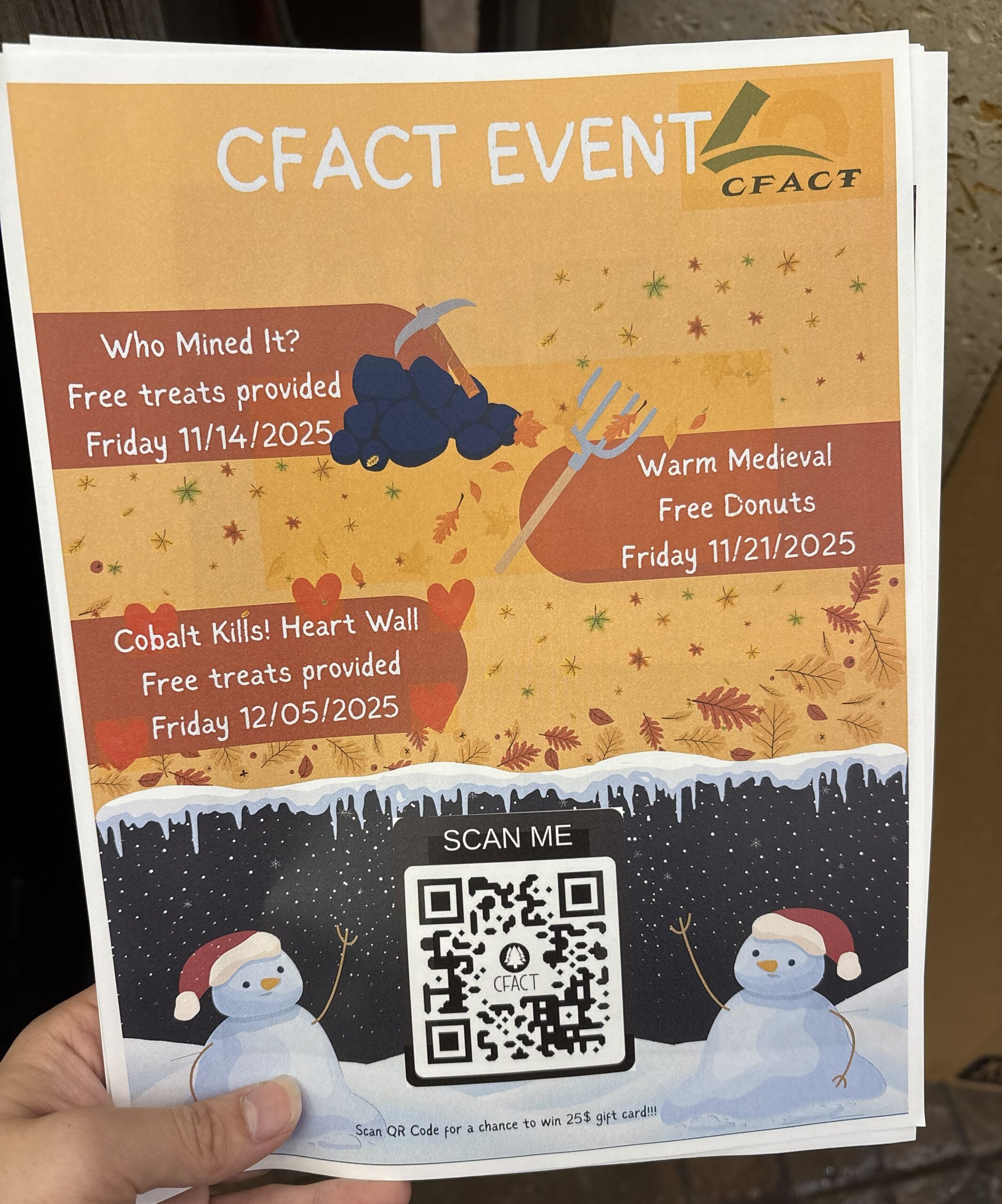
Over the course of roughly a month, Thien conducted a seven-question survey alongside his three separate tabling events, handing out flyers with a QR code that took students straight to the online poll. Instead of relying on a single day’s worth of conversations, he collected responses steadily, building a clearer picture of what students actually think when they’re given the chance to weigh in without pressure.
The results were striking. Across all seven questions 250 student respondents signaled a strong appetite for nuclear power, continued support for fossil fuels, a desire for open debate about climate and environmental issues, and persistent skepticism toward the “renewables-only” worldview that dominates so many classrooms.
And perhaps most importantly: the survey revealed something everyone should find deeply encouraging—a silent majority exists on campus, and it’s ready to be activated.
Students gave a surprisingly pragmatic set of answers across the board. Nearly half (47.2%) agreed that nuclear should replace wind and solar as the primary “clean” option, while only 24.8% disagreed—hardly the reflexive renewables worship we’re told defines campus culture.
On the ethics of “green” tech, students were even clearer: 56.4% said concerns like child labor and mineral sourcing affect their support for large-scale solar and EVs, versus just 18.4% who dismissed those concerns. When asked whether prosperity requires a reliable, efficient mix of nuclear and fossil fuels rather than betting everything on wind or solar, the campus leaned realistic again (38.4% agreed, 32.4% disagreed), with many still undecided—proof that the propaganda machine doesn’t convince everyone, but it does confuse some.
When it comes to solutions, students favored free-market innovation over government command-and-control (47.2% agree, 27.6% disagree). A majority (52.0%) also backed an “all-of-the-above” approach that includes fossil fuels, nuclear, and renewables when and where they make sense, rejecting the mainstream’s push for a net-zero energy grid.
Lastly, the loudest verdict of all: students want universities to encourage open debate and multiple viewpoints on climate and environmental issues—66.8% agreed, with only 14.0% opposed.
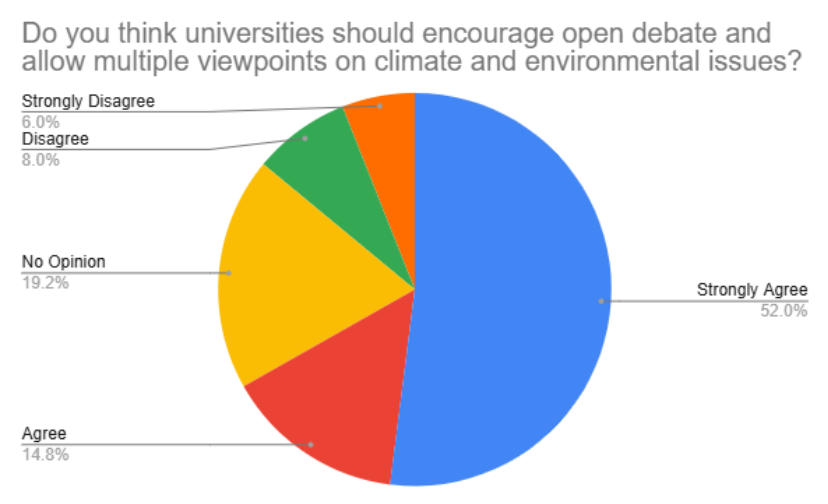
That number should make every campus administrator squirm. It confirms what we’ve seen again and again: censorship culture is not being driven by the average student—it’s being imposed from the top down and enforced by a loud minority.
A Silent Majority—And a Real Opportunity
Thien wasn’t shocked because the survey proved students are perfect. He was shocked because it proved they’re reachable.
As he put it:
“I’m surprise with the results of the survey. Although there were minor hiccups from some very vocal and unfriendly individuals, we managed to ascertain an understanding of what a sample of the student body believes.”
And his final takeaway was even more striking:
“I realized we do have a silent majority that must be activated rather than let the few influence our policies and decisions.”
That’s the CFACT mission in one sentence.
CFACT Collegians exist to do what most campus programs refuse to do: give students permission to think, equip them with facts, and create spaces where honest conversation can happen—even when the activists glare, scoff, or try to shut it down.
Thien’s month-long effort shows what happens when we stay grounded in principle, stay civil, and stay present: the narrative cracks, and reality shines through.